Sensorial
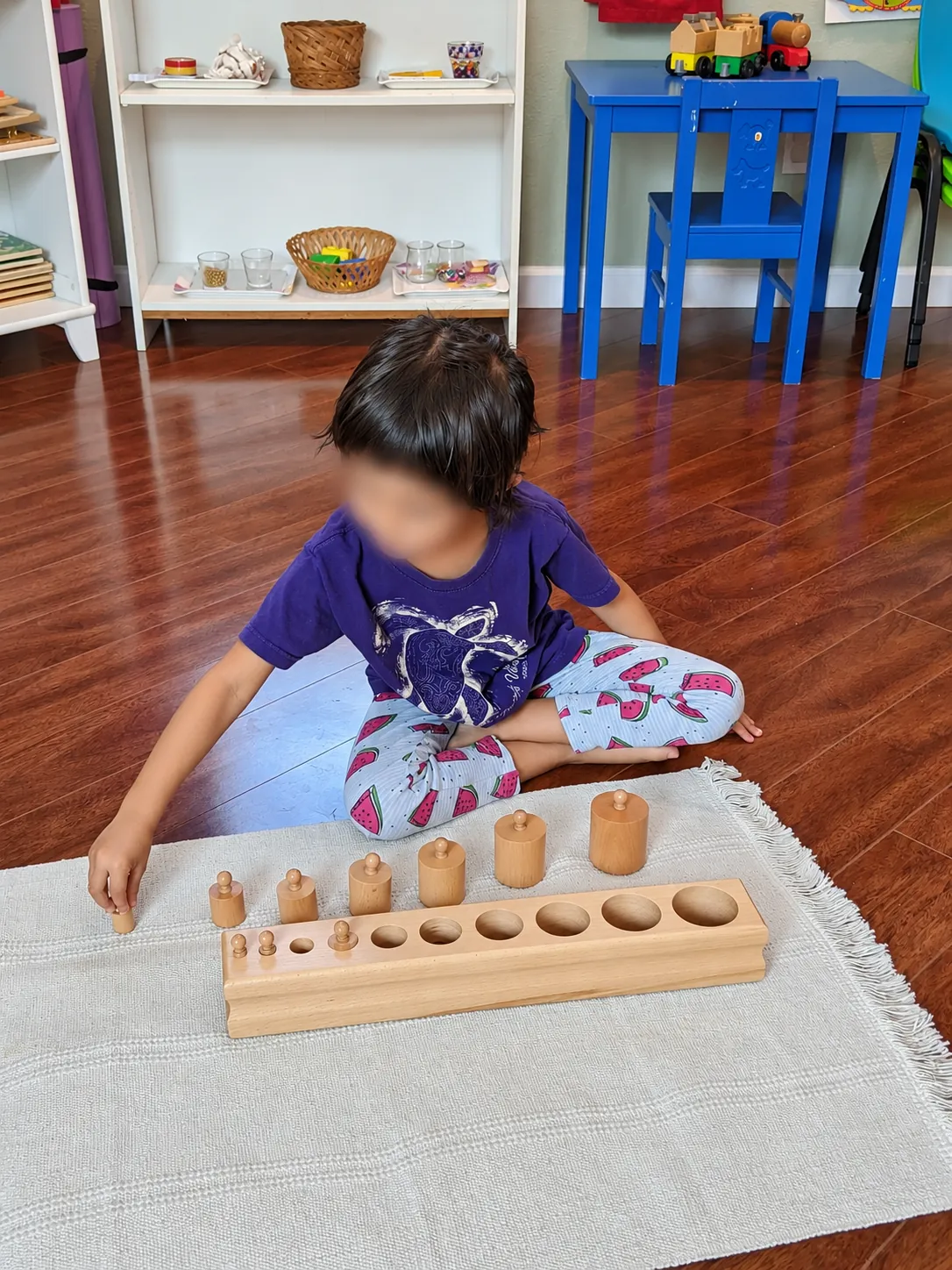
Knobbed Cylinders
Matching cylinders to their holes refines the pincer grip, the same grip used for holding a pencil.
Home / Montessori approach
The Montessori WayA home-based Montessori preschool and day care in Fremont for ages 1 to 6, led by an AMS-certified Director.
Montessori is more than a curriculum — it’s a way of seeing the child as capable, curious and ready to learn. Here is what that looks like every day at Little Learners Academy.
“Help me to do it myself.” Children dress, pour, clean and choose their own work, building real confidence.
Long, uninterrupted work cycles help children focus and enjoy the satisfaction of finishing what they start.
No one is rushed or held back. Each child moves forward when ready, guided by gentle observation.
Beautiful, self-correcting materials turn big ideas — numbers, letters, geography — into things you can touch.
Children of different ages share time together, so little ones look up to older friends and older ones grow as kind leaders and mentors.
Children practice kindness, patience and respect for others, for the classroom and for the natural world.
Curiosity leads. Because children choose work that interests them, motivation comes from within — not from rewards.
Strong foundations in language, math and social skills help children step into school with confidence.
Early childhood education is the key to the betterment of society.— Maria Montessori
Maria Montessori (1870–1952) was an Italian physician and educator who changed how the world thinks about childhood. By patiently observing children, she discovered that they learn best through hands-on discovery, freedom within limits, and an environment made just for them.
In Montessori we call activities “works” — because to a child, play is work. Each beautiful material isolates one idea, so children discover concepts with their own hands.
Matching cylinders to their holes refines the pincer grip, the same grip used for holding a pencil.
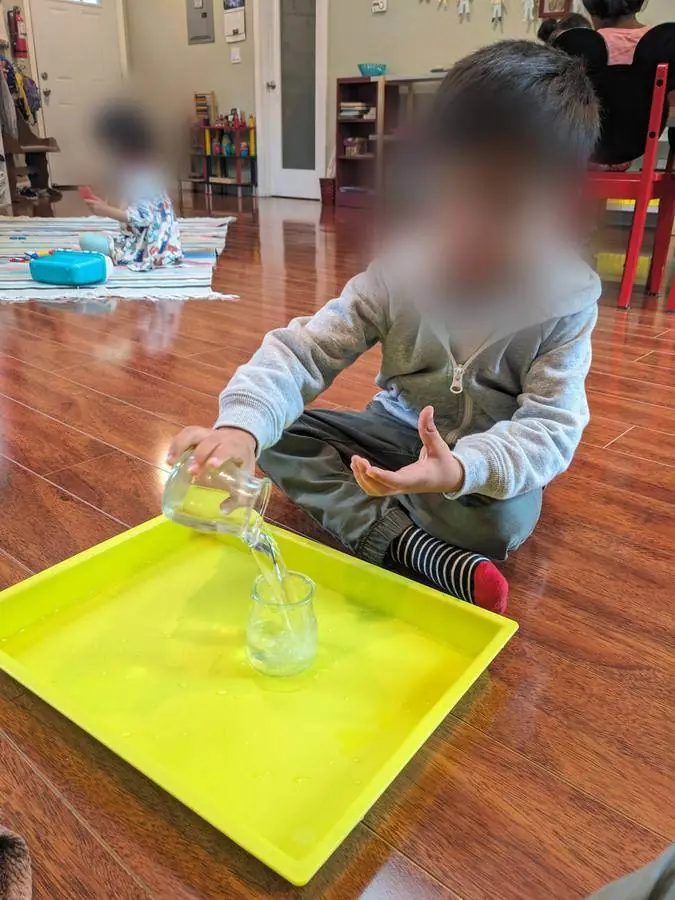
Pouring water without spilling builds focus, control and independence, with a little water play too.
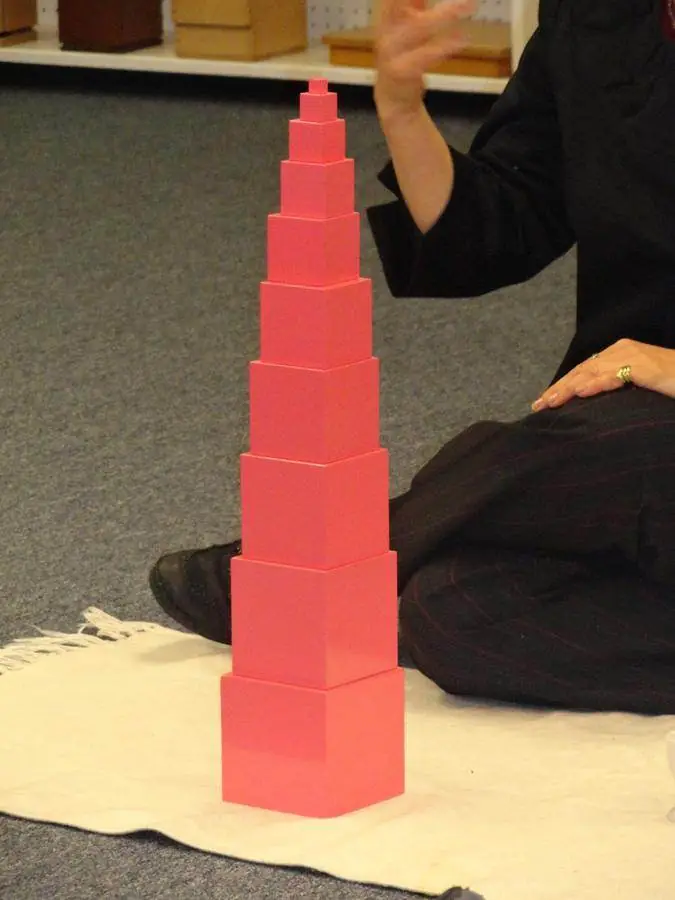
Ten pink cubes teach size, order and visual discrimination, and build concentration and coordination.
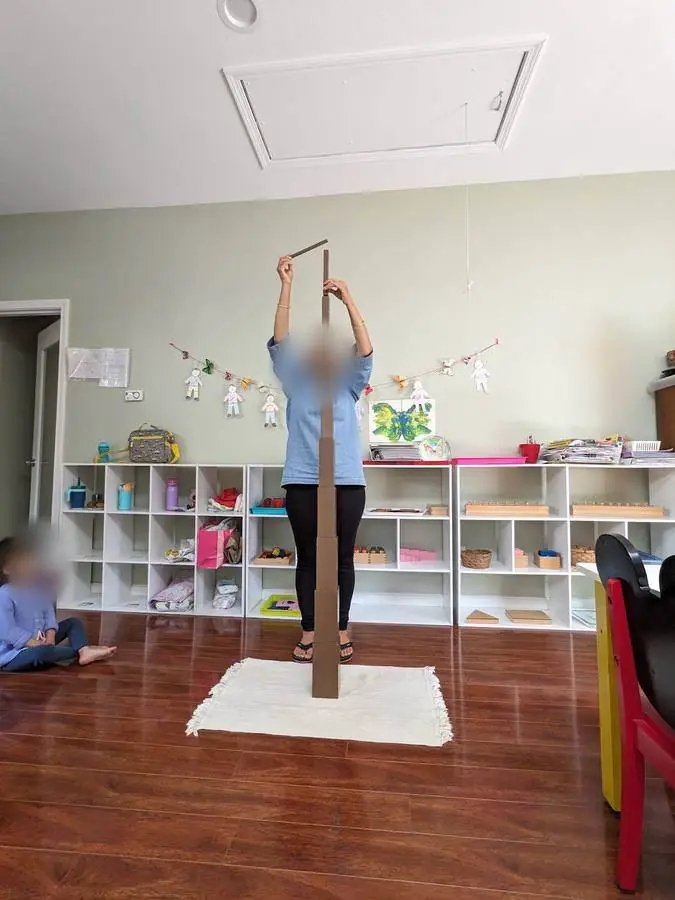
Ten brown prisms from thin to thick teach dimension, order and the ideas of thicker and thinner.
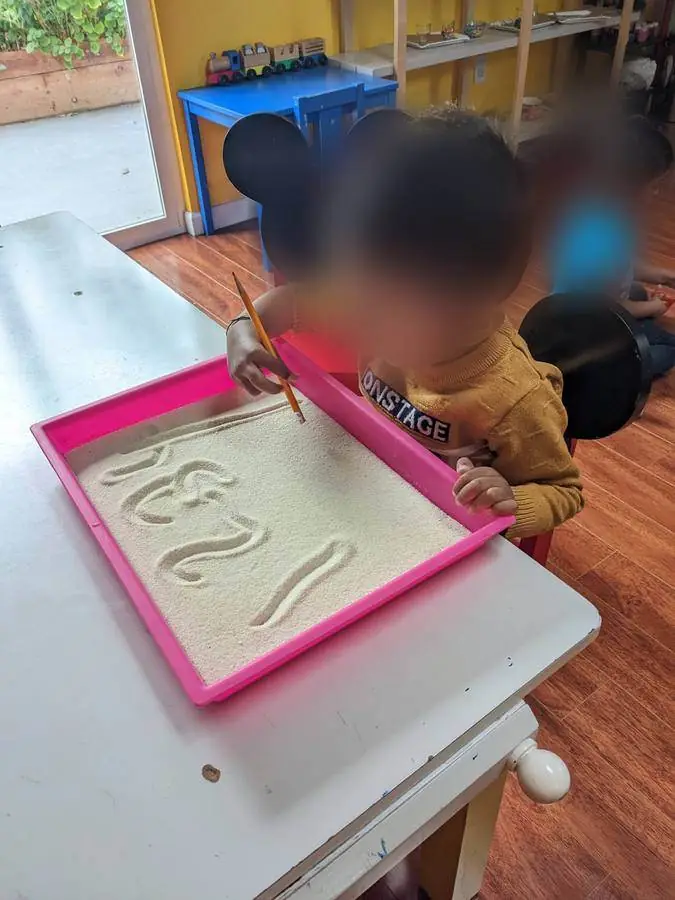
Tracing numbers and letters in sand connects touch, sight and movement long before pencil writing.
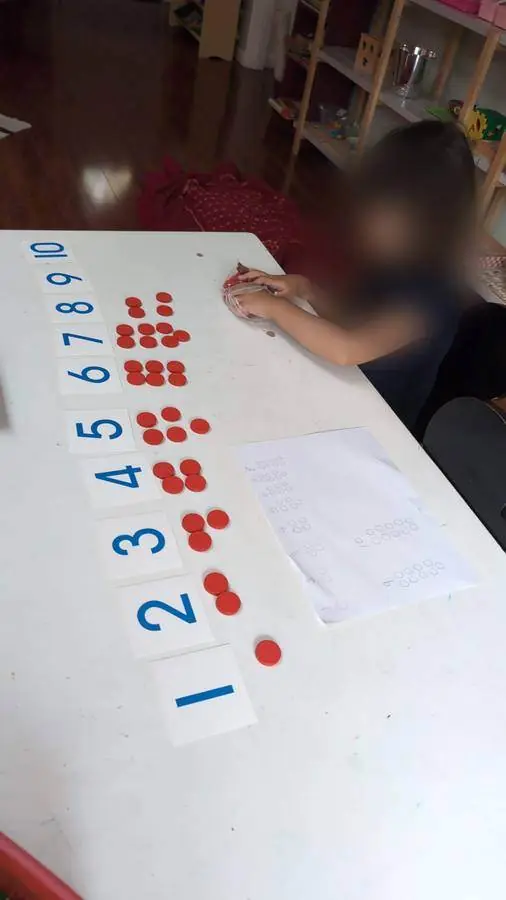
Matching number cards to red counters shows what each numeral really means, from 1 to 10.
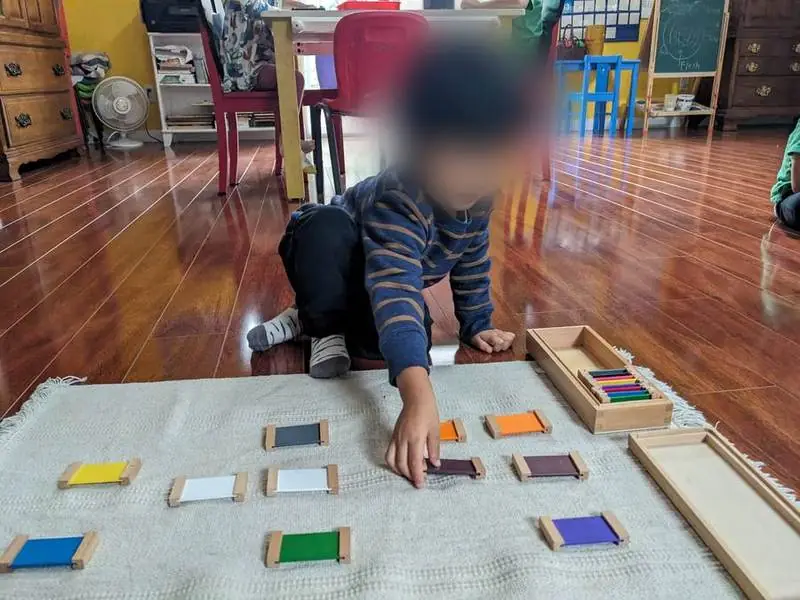
Matching and grading pairs of color tablets trains the eye and builds color vocabulary.
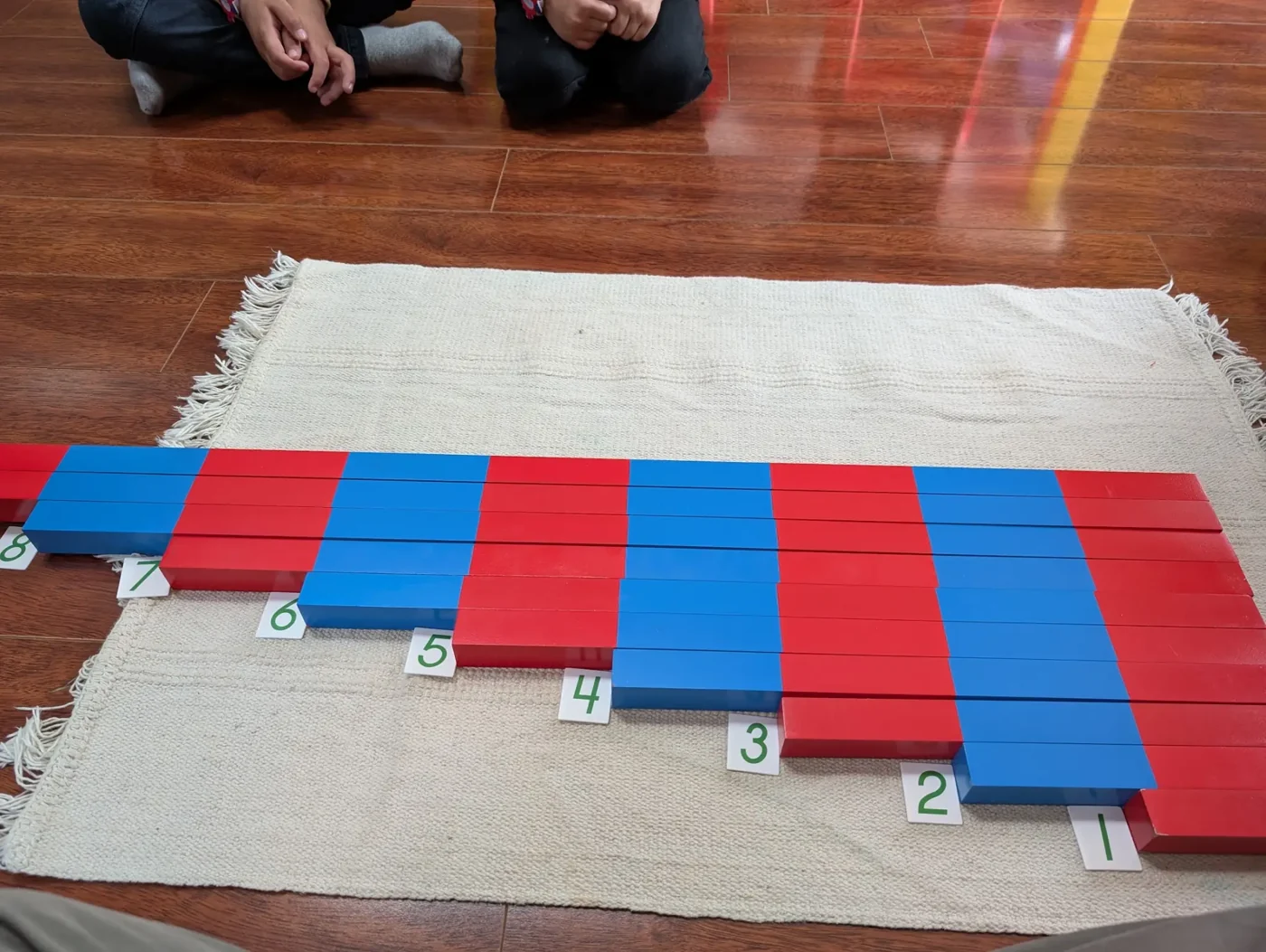
Alternating red and blue segments make quantities from 1 to 10 tangible. Matching the rods with numeral cards connects counting, quantity and written symbols.
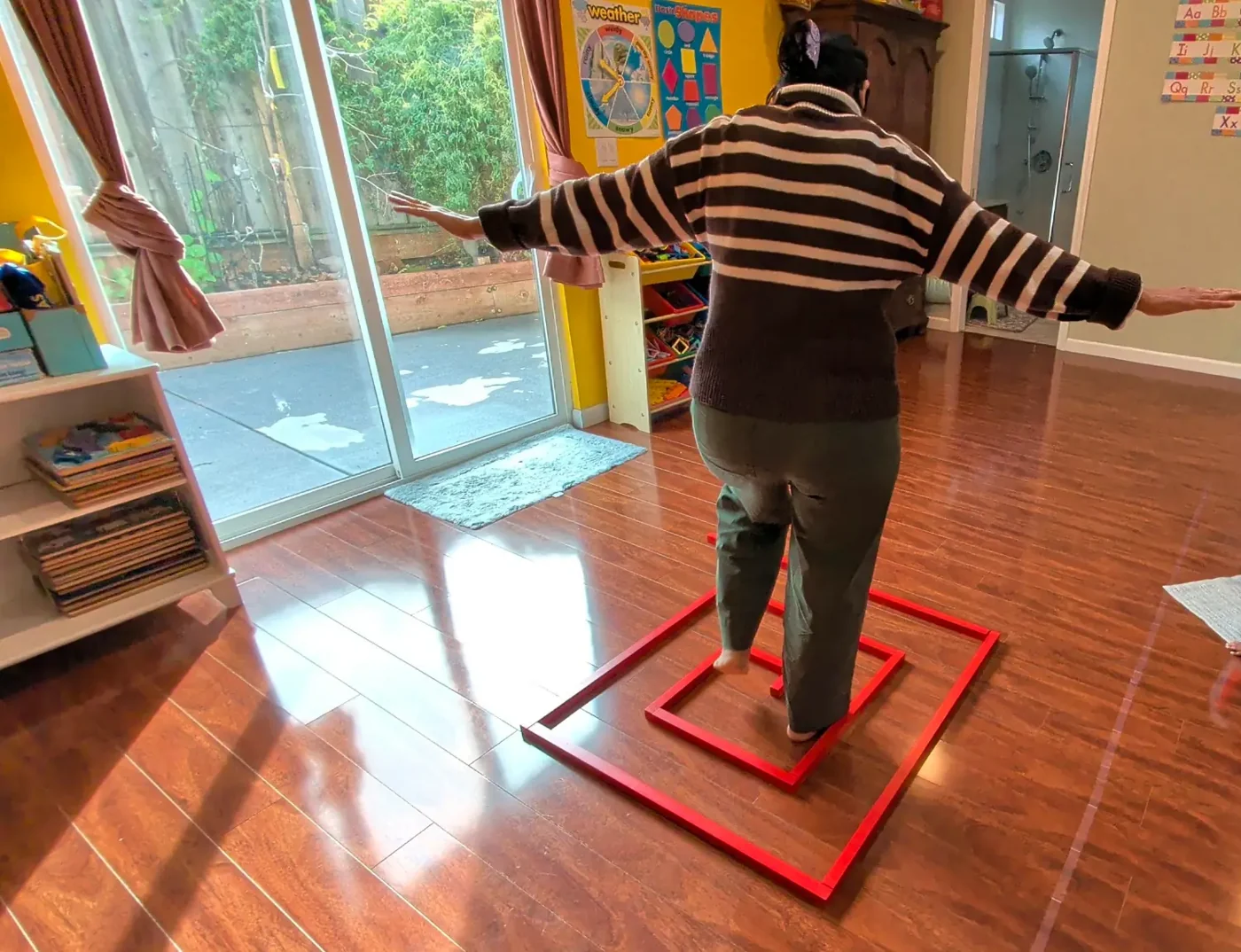
Grading rods by length develops visual discrimination and introduces the concepts of longer and shorter. A guided movement demonstration also encourages balance, coordination and spatial awareness.
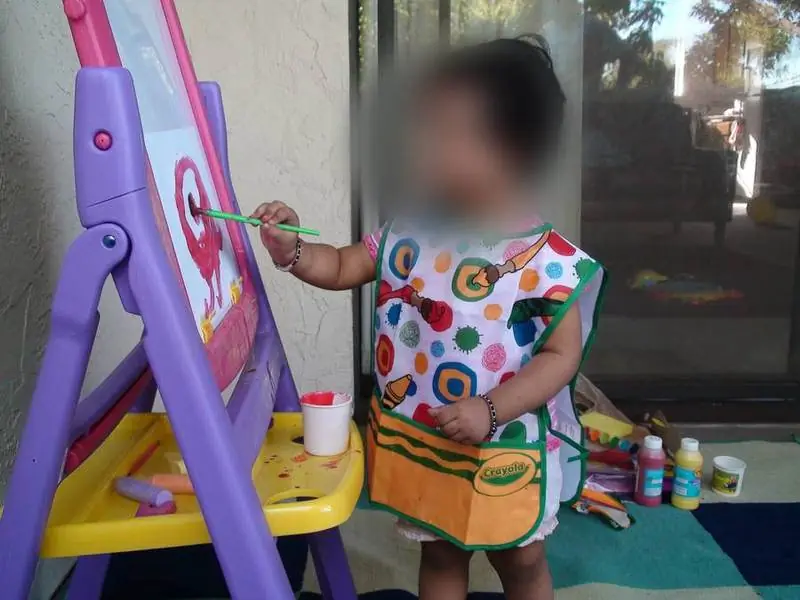
Colors, brushes and free expression. Creativity is part of every day.
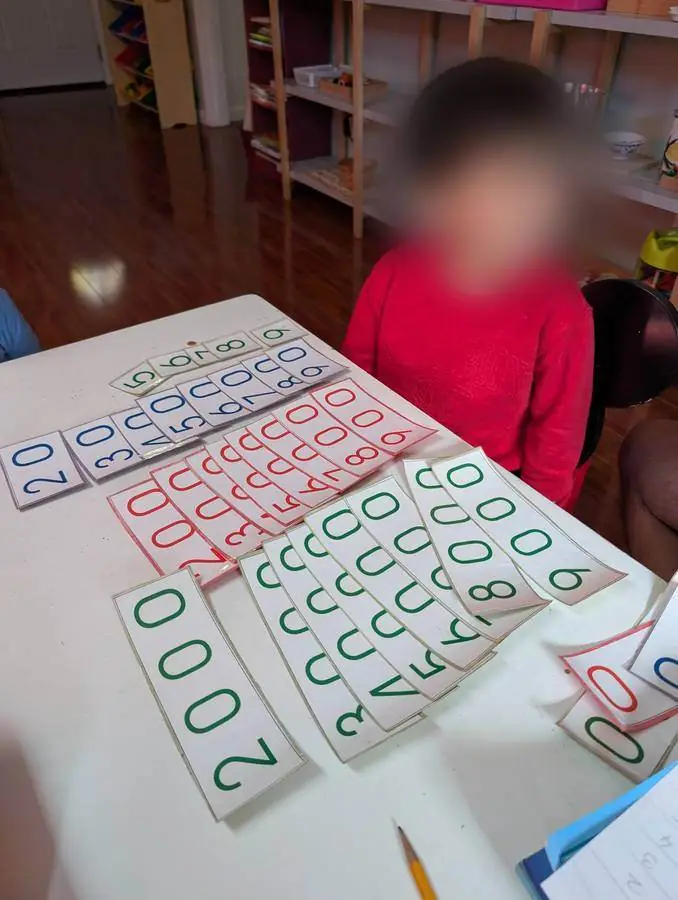
Colorful place-value cards make ones, tens, hundreds and thousands visible and easy to understand.
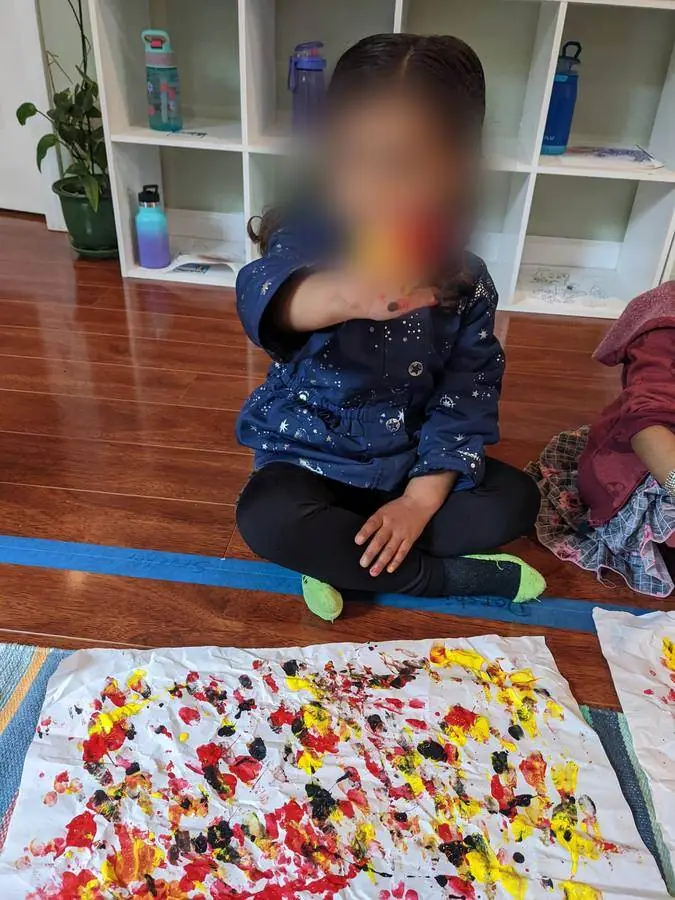
Messy, joyful painting with hands and tools lets children explore color and texture.
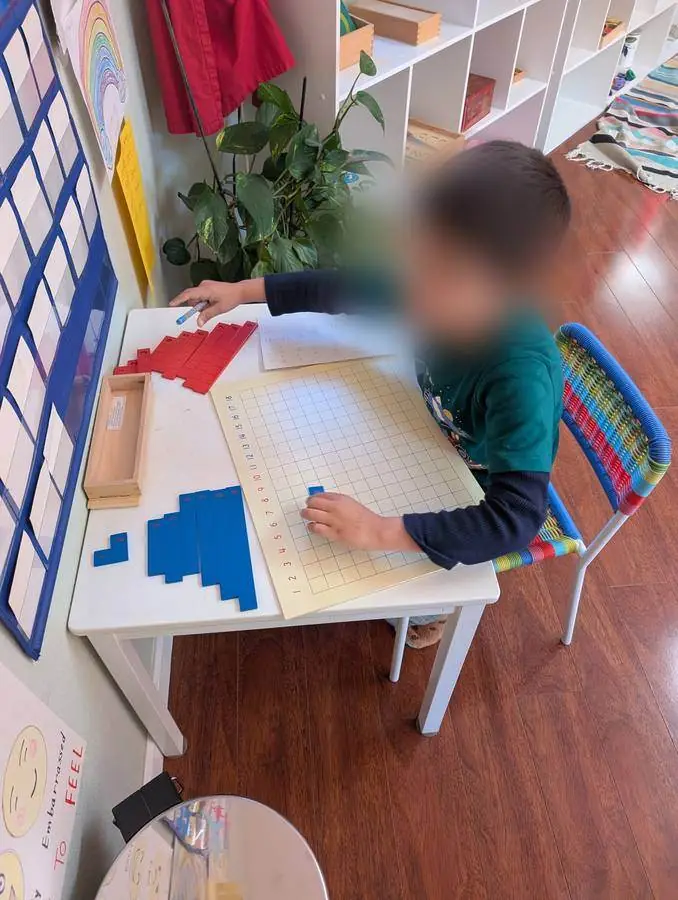
Blue and red strips turn addition into a hands-on discovery, one number at a time.
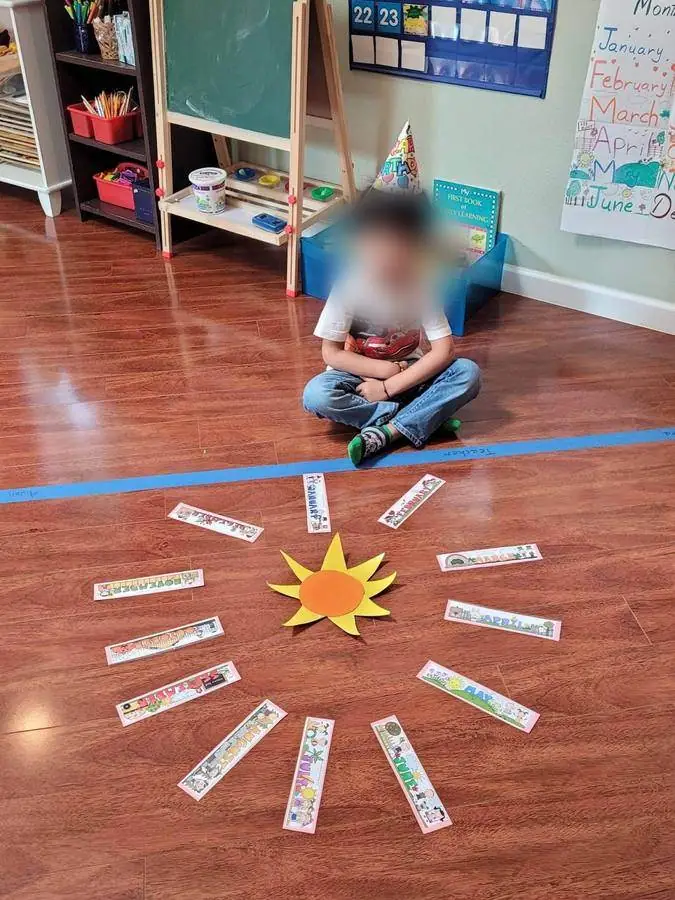
A Montessori birthday tradition: each child walks around the sun once for every year of life, learning about the calendar, the seasons and our place in the solar system.
Lifting continents by their little knobs introduces geography, cultures and a love for our world.
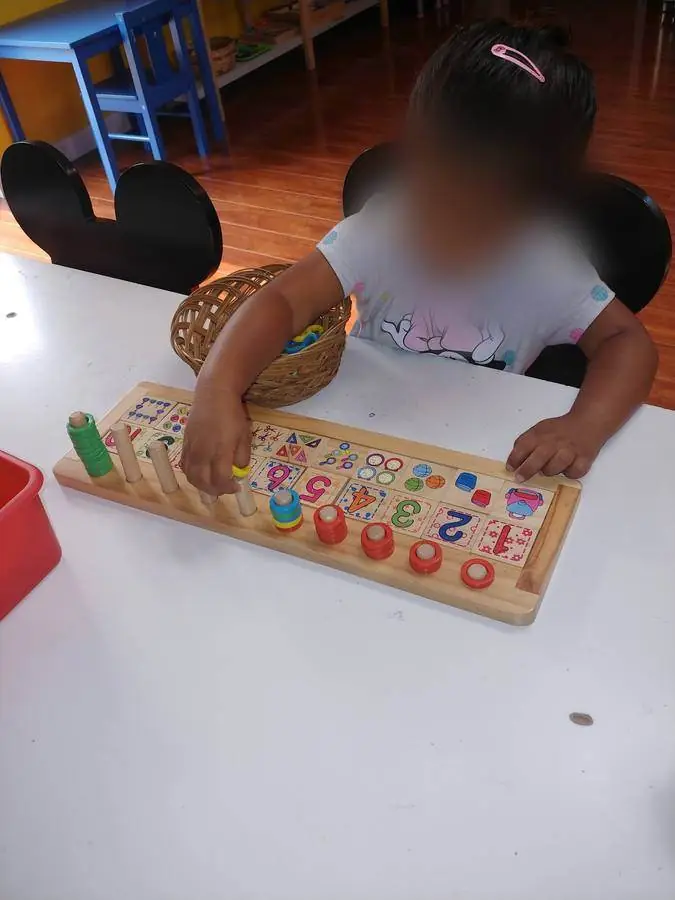
Stacking rings on a numbered board links each numeral to its quantity.
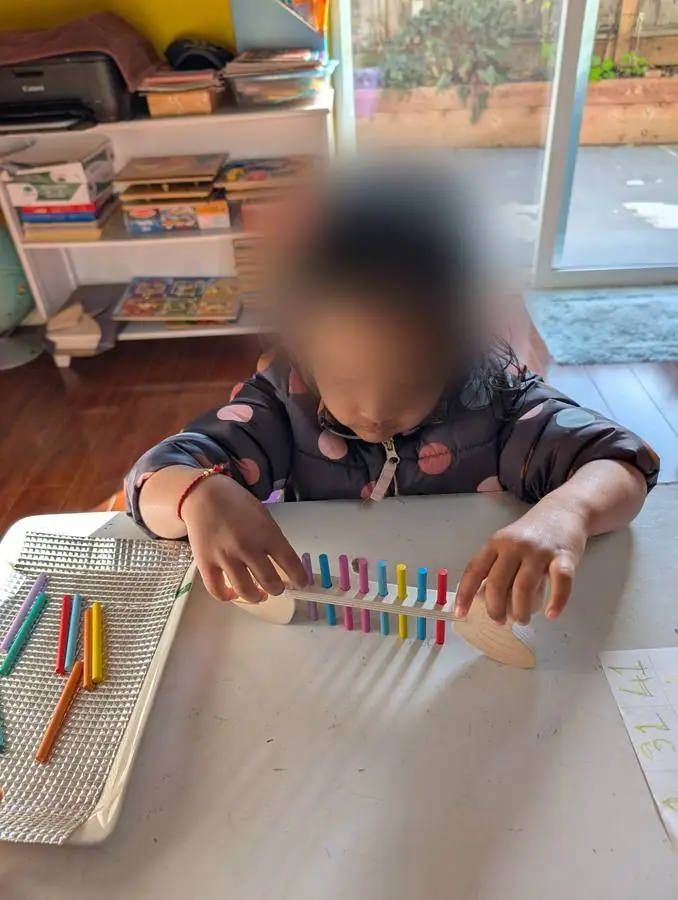
Colorful pegs and a wooden fish strengthen fine motor skills, color matching and counting.
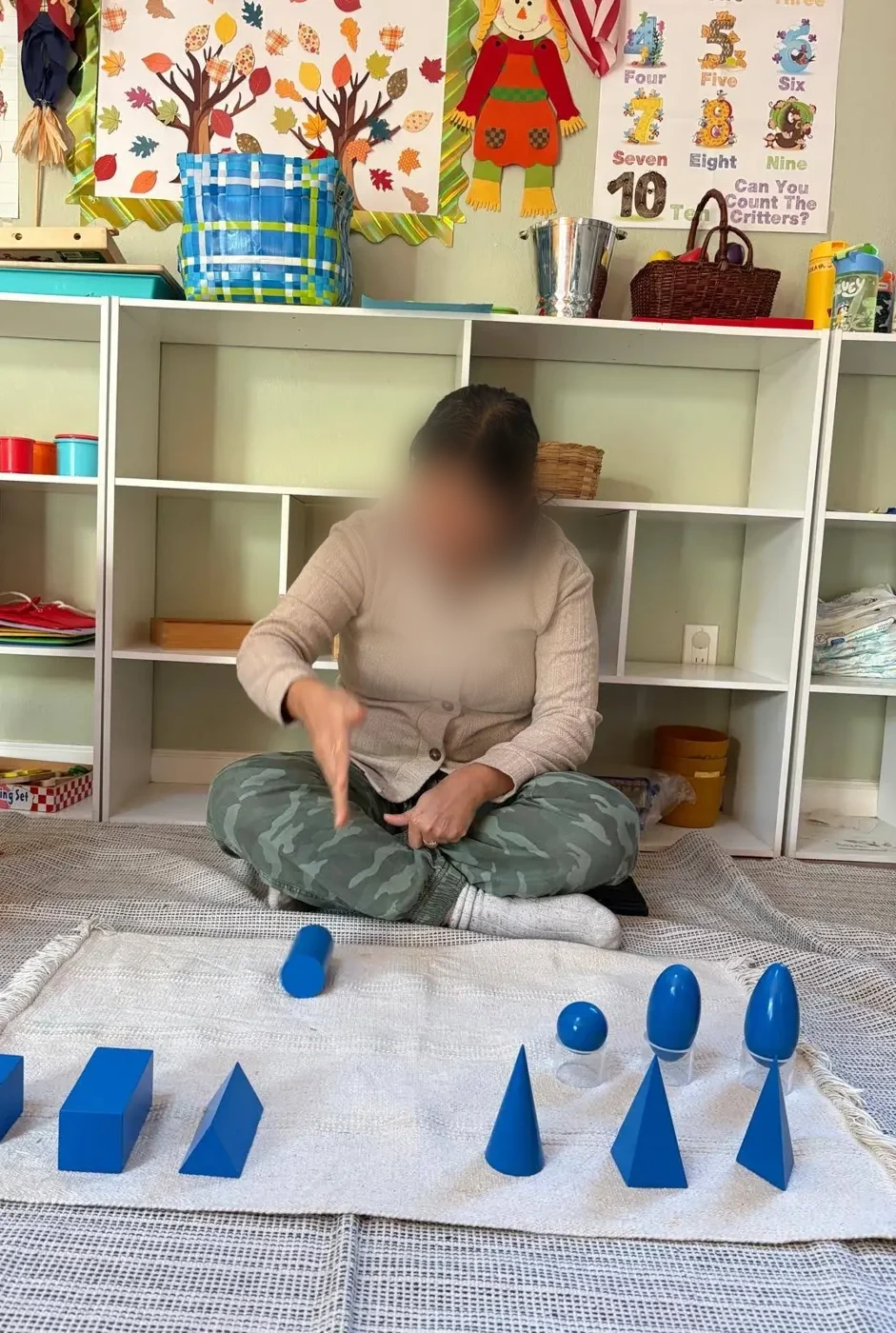
Exploring cubes, cylinders, spheres, cones, prisms and pyramids builds spatial awareness, shape vocabulary and a foundation for geometry.
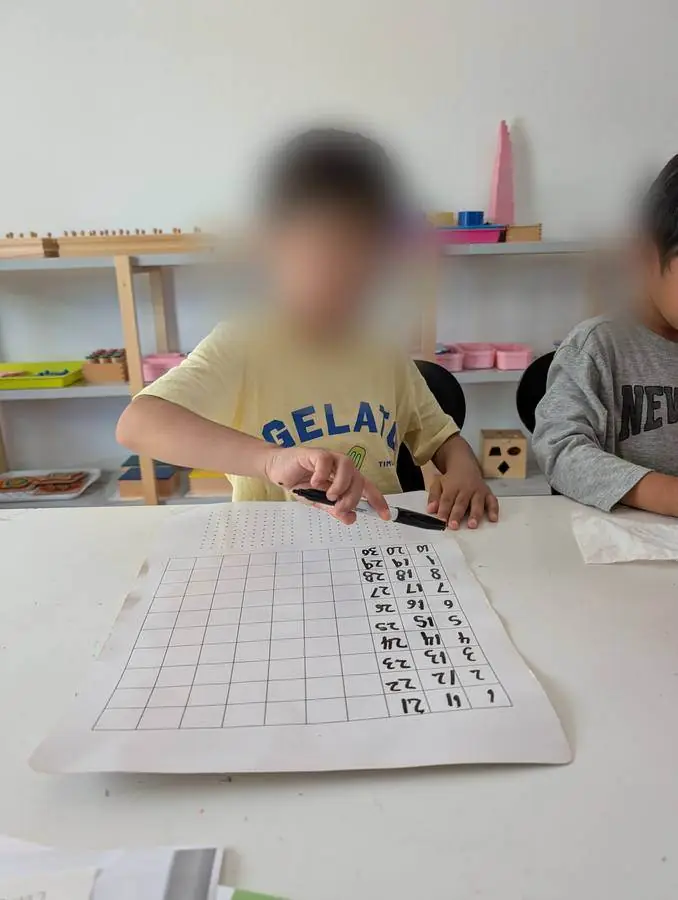
Writing numbers on a grid builds number order, handwriting and patience, one square at a time.
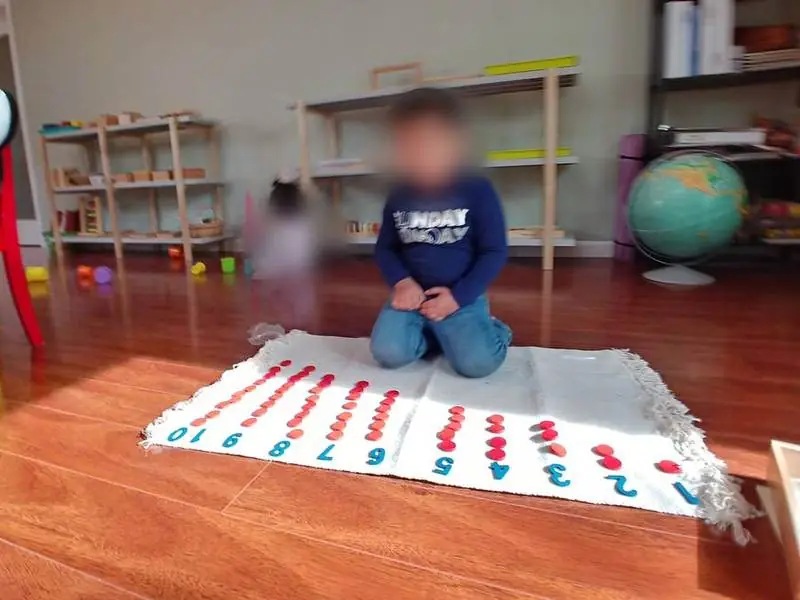
Laying out numeral cards from 1 to 10 builds number order and recognition.
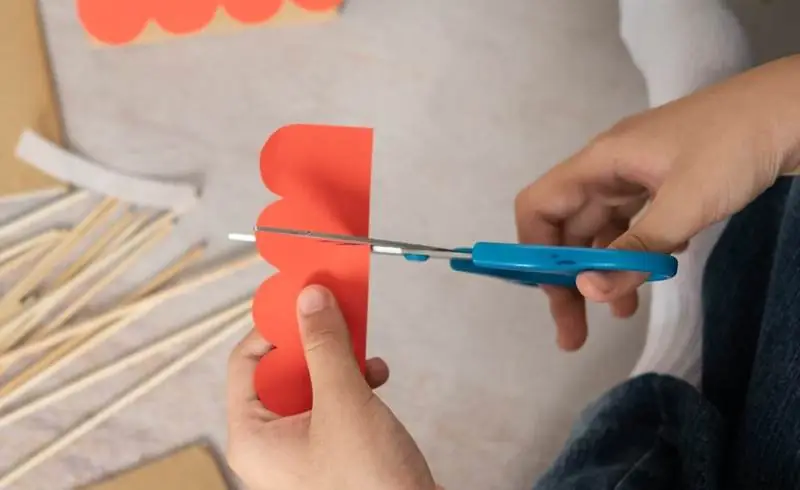
Careful cutting builds hand strength, coordination and concentration, and is great practice for writing.
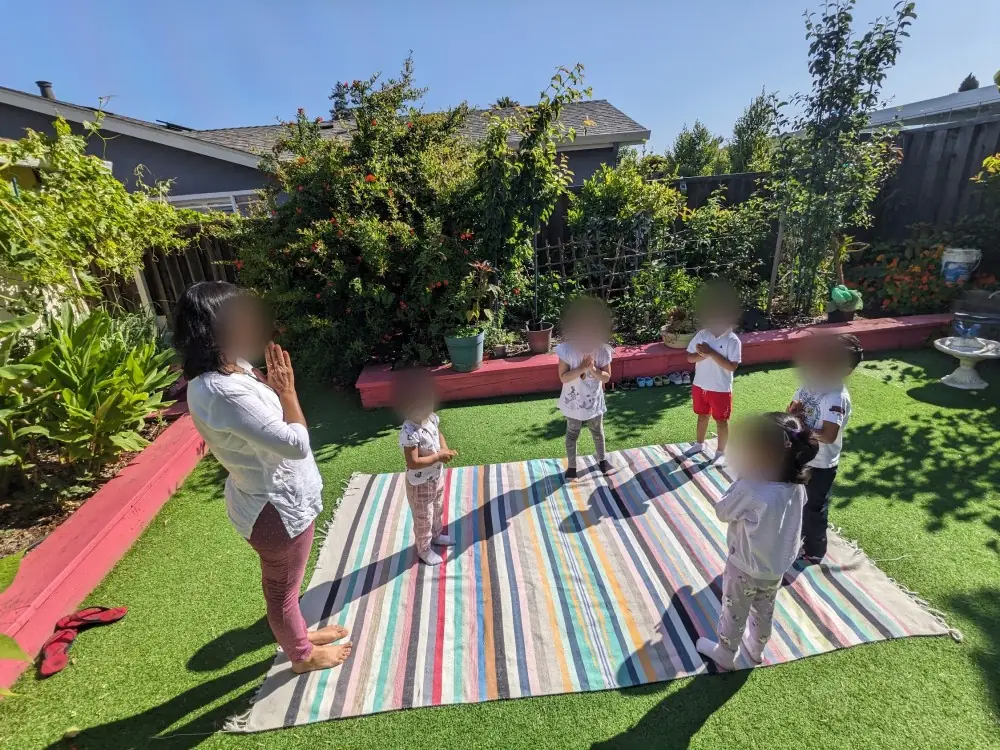
Our children practice yoga outdoors, stretching, balancing and breathing together to feel calm, strong and focused.
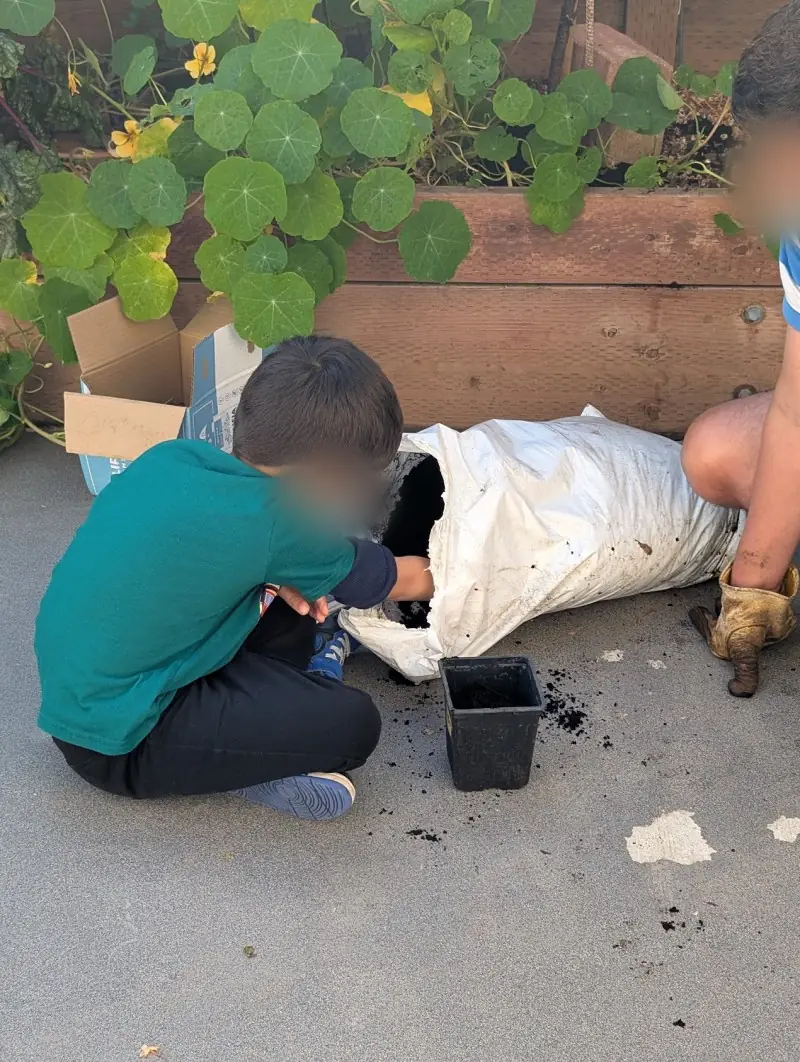
Filling pots with soil, planting seeds and watering teach care for living things and for our environment.
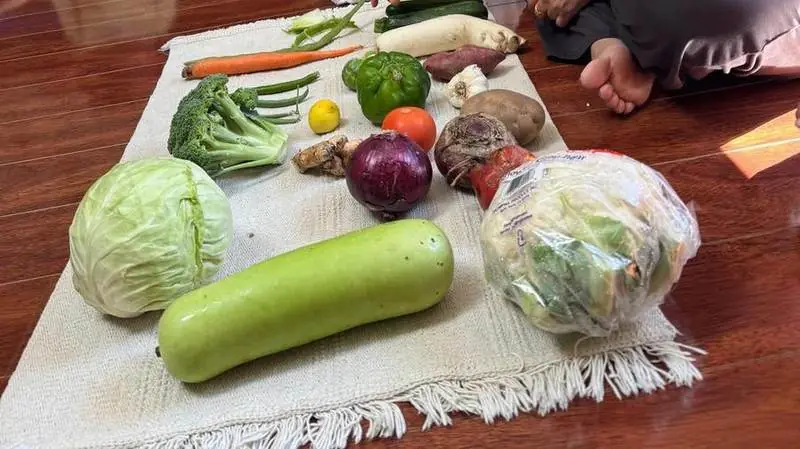
Our teachers present real vegetables so children can see, touch, name and talk about healthy food.
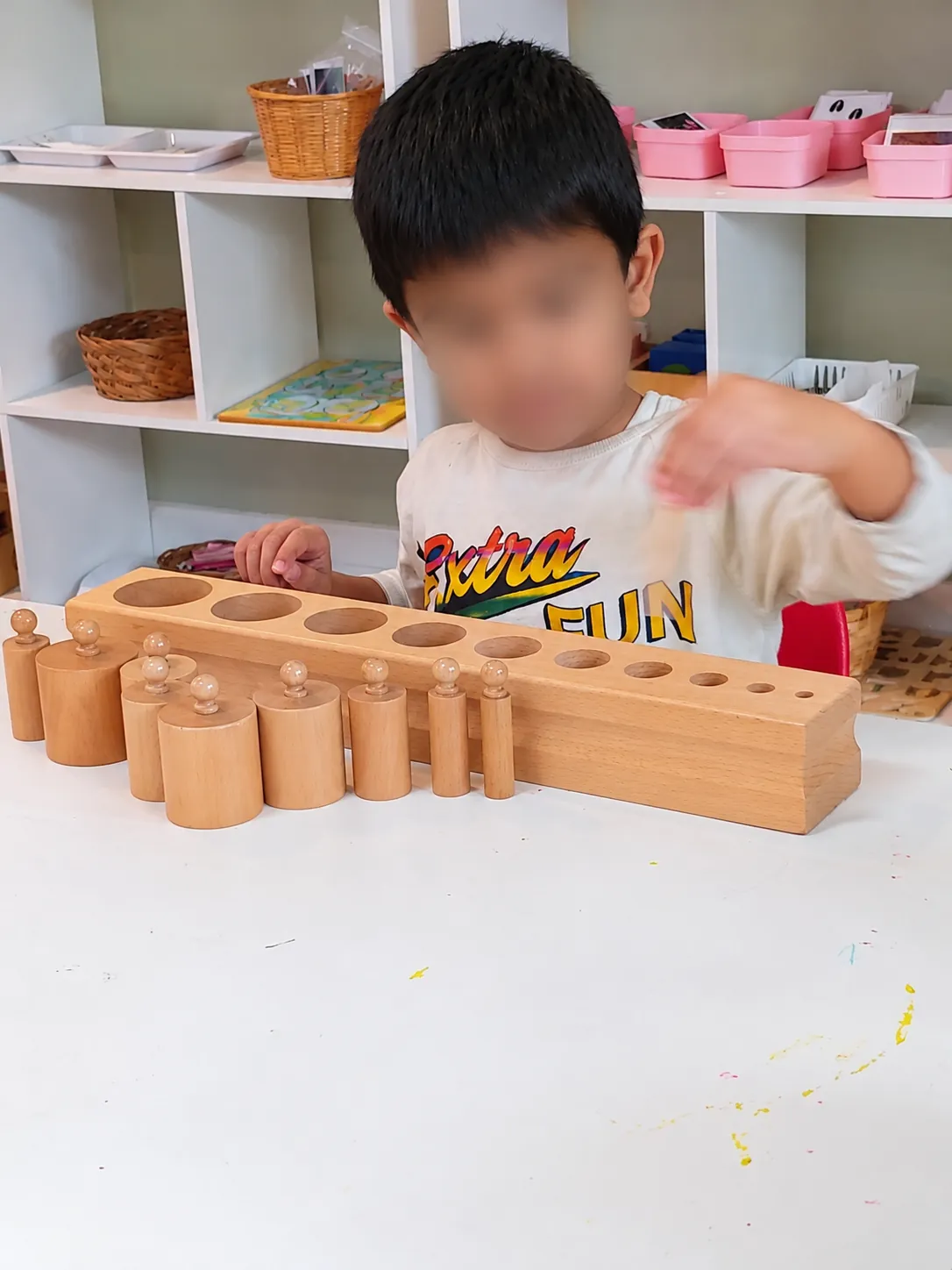
Pointing, matching and fitting each cylinder builds concentration and visual discrimination.
A 3D puzzle that quietly prepares the mind for algebra, all through play.
Buttons, zippers and laces build fine motor skills and the pride of getting dressed alone.
Come see our classrooms, meet our teachers and ask anything. Call or text us, or send a message.